Welcome!
Morabaraba (also known as Umlabalaba, and by many other names!) is an ancient and traditional African board game, which has been played for at least thousands of years. Traditionally taught to young herdboys, the game is played by millions in Africa (it would appear that approximately 40% of South Africans play the game!). While it is very easy to make a Morabaraba board, and very easy to learn to play, the game is rich in depth and sophistication, and is definitely not simplistic or trivial. As part of Africa's cultural heritage, Morabaraba is a profound game which has much to offer the world of strategy board games.
UPDATE: We've created a tool to allow you to easily create images of your own board positions - click here to try it. Like everything we do, it's free to use.
UPDATE: Morabaraba 0.7 released on 29 July 2007, and available from the AHEM page .
This site provides the following resources:
- Computer Morabaraba - information about Morabaraba and Computers, including AHEM , a powerful, free Morabaraba opponent for Windows and Linux, as well as useful information for aspiring Morabaraba programmers
- Downloads - Morabaraba-related downloads, including a printable board (PDF) and official MSSA rulebook
- Rules - My explanation of the rules of Morabaraba
- Strategy - obtaining a deeper insight into the game
- Links - web pages about Morabaraba and related topics
- News - News about Morabaraba
While very little information about Morabaraba seems to have made it to the Internet, the game itself is fascinating, and deserves a lot more attention than it has received. It is my hope that by making as much information available as possible, interest in this traditional African game might be broadened. If you have any information of interest about the game, please email me and I'll publish it here.
Origins and History
The origins of Morabaraba predate recorded history in Africa. However, archeological artefacts as well as the widespread popularity of the game argue that Morabaraba has been a popular game in Africa for a very long time - having been played for (at least) thousands of years. Although on the face of it Morabaraba appears to be a simple variant of the European game Nine Men's Morris (also known as Muehle, Mill or Merelles), it appears more likely that Morabaraba evolved from Mancala games, known to date back to ancient Egypt. Certainly, the initial placement of the cows is somewhat reminiscent of the "sowing" of seeds in Mancala. It would therefore appear likely that the African game of Morabaraba predates the European game of Nine Men's Morris, itself known to be an ancient game. Perhaps Nine Men's Morris is really a simplified form of Morabaraba.
Direct evidence for Morabaraba's ancient provenance is also available.
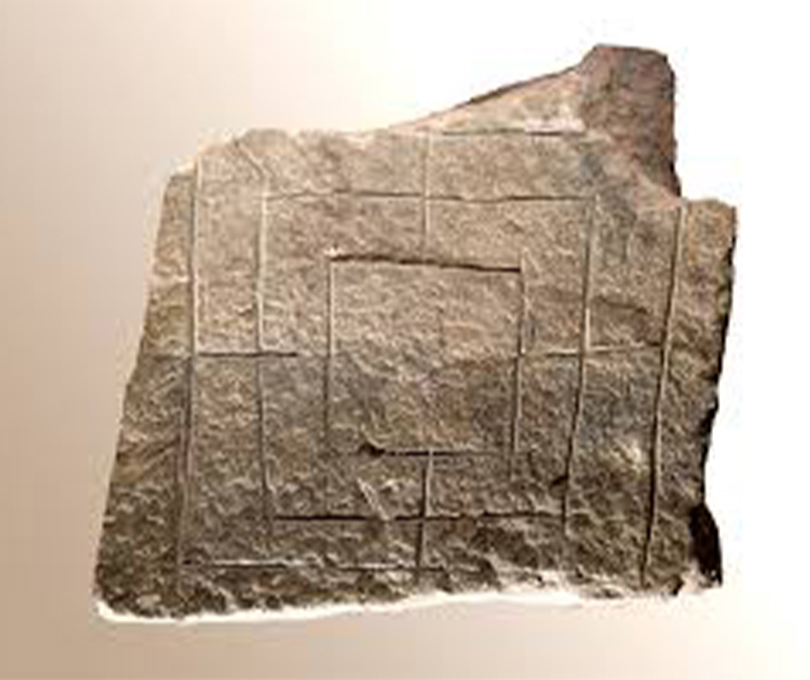
- 800-year-old Morabaraba boards have been found at Mapungubwe in South Africa
- A Morabaraba board has been found carved into the Great Pyramid of Khufu - if the board is the same age as the pyramid - maybe placed there for the Pharoahs use in his afterlife, or perhaps for the relaxation purposes of the stonemasons - then the game could be dated back to 2560BC! Of course, it's possible that this board was retrofitted to the pyramid after its original construction.
- Interestingly, if you construct the Morabaraba board with each of the "squares" as a successively higher platform, the overall game is shaped like a pyramid.
- Related games (such as Nine Men's Morris) also have substantial evidence of great antiquity.
Cultural Background
Although Morabaraba appears to have been a constructive element of African culture, used to teach herdboys appreciation for tactical thinking as well as assessing the strategic skills of a chief's advisers, more recently the cultural perception has become ambivalent. While the game is still played by millions, during the Apartheid years it came to be seen as an "old man's game" or a "waste of time" for ne'er-do-wells. However, with the resurgence of interest in traditional African culture, Morabaraba is taking on a positive new look, and is being promulgated by many organisations and government bodies.
There are many variations in the rules (and the board) used to play Morabaraba; perhaps the most fundamental is the difference between the Morabaraba board and the Sesotho Morabaraba board. However, the game still remains the same, and Mind Sports South Africa has now established a common rulebook (the "Generally Accepted Rules") for the competitive game. It is to be hoped that the flavour of various regional variations is preserved as well, though.
Morabaraba as a Sport
Morabaraba is taken very seriously by its players. Although games are generally played quickly, and the setting is typically informal, players often gamble on Morabaraba games, and the stakes can be quite high - legend reports that African chiefs would select the best Morabaraba players as their advisors and council members!
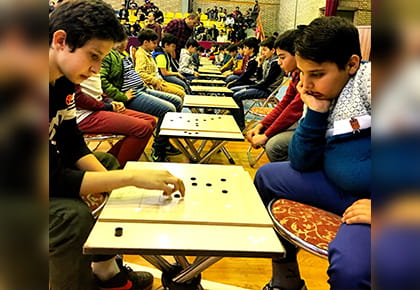
More recently, Morabaraba has begun to build a new identity as a sport. The game obtained official recognition from South Africa's Department of Sport and Recreation, as well as the National Sports Commission, in 1996. This means that South Africans may obtain Protea colours in the sport. Mind Sports South Africa (MSSA) has taken on the mandate of putting Morabaraba on a sound sporting footing in South Africa and internationally. To this end, MSSA (which is now the official body for Morabaraba) has promulgated a standard set of rules, organised tournaments at regional, national and international levels. As MSSA is affiliated with the International Wargames Federation, this has allowed for the establishment of an official Morabaraba World Championship. MSSA has been involved with Morabaraba for many years, and has invested both financially and through the time of its members in the development of the game. This has resulted in regular and very successful tournaments across South Africa, helping to popularise the traditional game with a new generation of players.